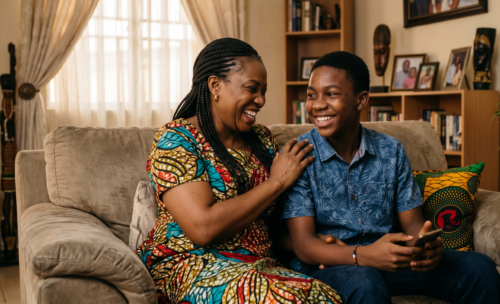
“Mummy, I’m angry!” These simple words are often the first step in understanding emotional regulation in children.
Whether it’s a toddler throwing a tantrum because the television was switched off or a teenager slamming the bedroom door after being corrected, every Nigerian parent has witnessed moments when emotions seem to take over.
While many parents focus on raising children who excel academically or behave well in public, psychologists have found that one life skill consistently predicts better mental health, healthier relationships, and greater resilience in children: emotional regulation.
Simply put, children who learn how to understand and manage their emotions are better equipped to navigate life’s challenges, both now and in adulthood.
What Is Emotional Regulation?
Emotional regulation is the ability to recognise, understand, express, and manage emotions in healthy ways.
It does not mean teaching children to suppress their feelings or “be strong.” Instead, it means helping them respond the right way to emotions like anger, sadness, fear, excitement, and disappointment.
A child with good emotional regulation will still get upset after losing a football match, failing a test, or breaking a glass, but instead of becoming aggressive or completely shutting down, they can calm themselves, think clearly, and move forward.
Why Does Emotional Regulation Matter?
Research consistently shows that children with strong emotional regulation skills are more likely to:
- Have lower levels of anxiety and depression
- Build healthier friendships
- Perform better in school
- Handle stress more effectively
- Solve problems without aggression
- Develop higher self-esteem
- Become emotionally healthy adults
On the other hand, children who struggle to regulate emotions are more prone to frequent outbursts, behavioural difficulties, anxiety, social withdrawal, or risky behaviours as they grow older.
The Nigerian Reality
Parenting in Nigeria comes with unique pressures and expectations.
Many parents juggle demanding jobs, rising living costs, heavy traffic, extended family responsibilities, and concerns about security. Understandably, patience sometimes runs thin.
In many homes, children are still raised with phrases like:
- Stop crying.
- You are a disgrace.
- Shut up your mouth or I will slap you.
- Why can’t you be like your friend?
While these statements often come from a place of discipline or tradition, they unintentionally teach children that emotions are unacceptable. The result is that instead of learning how to manage difficult feelings, many children simply hide them.
Unfortunately, hidden emotions don’t go away. They often show up later as aggression, anxiety, withdrawal, poor academic performance, or even physical complaints such as headaches and stomach aches.
Unfortunately, hidden emotions don't go away. They often show up later as aggression, anxiety, withdrawal, poor academic performance, or even physical complaints such as headaches and stomach aches. Share on X
Emotional Regulation Begins at Home
Children are not born knowing how to manage emotions. Just as they learn to speak by listening to adults, they learn emotional regulation by watching how the adults around them respond to emotional and physical stress.
Think about it.
If a parent shouts every time something goes wrong, a child learns that shouting is the appropriate response to frustration and stress.
If a parent calmly explains their feelings and tries to solve the problem, the child begins to imitate those healthy coping skills. Children learn more from what we do than what we say.
Signs Your Child May Be Struggling
Every child has emotional outbursts occasionally. However, parents should pay closer attention if a child frequently:
- Has explosive anger over minor issues
- Cries excessively without being able to calm down
- Becomes physically aggressive
- Withdraws from family or friends
- Avoids school because of anxiety
- Appears overwhelmed by small disappointments
- Finds it difficult to recover after upsetting events
These behaviours are often signals that a child needs support rather than punishment alone.
How Nigerian Parents Can Build Emotional Regulation
| Strategy | What to do | Try saying |
|---|---|---|
| Name the emotion | Instead of shutting the feeling down, label it so the child understands what’s happening inside them | “You are crying because your friend went back home.” |
| Let feelings be safe | Separate the emotion from the behaviour | “It’s okay to be angry, but it’s not okay to hit your brother when you are angry.” |
| Model calm behaviour | Show your own coping process out loud, rather than suppressing it | “I am feeling frustrated. I need a few hours to calm down before we continue talking.” |
| Teach healthy coping skills | Offer age-appropriate tools they can reach for on their own | Deep breathing, counting to ten, drawing, a short walk, calming music, talking to a trusted adult, journalling for older children |
| Avoid emotional shaming | Acknowledge the feeling before correcting the behaviour | Skip “You are doing too much” or “Stop behaving like a baby” |
| Create time for conversation | Build a daily check-in into an existing routine, like dinner or bedtime | “What made you happy today?” “What was difficult today?” “How did you handle it?” |
When Should Parents Seek Professional Help?
Sometimes emotional struggles go beyond what parents can manage at home. Consider speaking with a psychologist or mental health professional if your child:
- Remains unusually sad for several weeks
- Has persistent anxiety that affects daily life
- Frequently talks about hopelessness
- Becomes extremely aggressive
- Shows sudden changes in eating or sleeping habits
- Withdraws from activities they previously enjoyed
- Begins harming themselves or talking about death
Seeking help early is a sign of responsible, attentive parenting.
Raising Emotionally Strong Children
Many Nigerian parents dream of raising children who become doctors, engineers, lawyers, entrepreneurs, or leaders. These ambitions are important. But before children can thrive academically or professionally, they need the emotional skills to cope with failure, disappointment, relationships, peer pressure, and life’s inevitable challenges.
Emotional regulation is not a luxury; it is a foundation for lifelong mental wellbeing.
Every time a parent listens patiently, names an emotion, comforts a frightened child, or teaches healthy ways to express anger, they are doing far more than resolving today’s conflict. They are shaping tomorrow’s emotionally healthy adult. And that may be one of the greatest gifts any parent can give.
Frequently Asked Questions
What is emotional regulation in children? Emotional regulation is a child’s ability to recognise, understand, express, and manage emotions like anger, sadness, and fear in healthy ways, rather than suppressing them or acting out.
Why is emotional regulation important for a child’s mental health? Children with strong emotional regulation skills tend to have lower anxiety and depression, healthier friendships, better school performance, and higher self-esteem. Weak emotional regulation is linked to more frequent outbursts, withdrawal, and behavioural difficulties.
What causes poor emotional regulation in children? Children learn emotional regulation by watching the adults around them. Homes where emotions are shut down or shamed, through phrases like “stop crying” or “you are a disgrace”, teach children to hide feelings instead of managing them.
At what age should a child start developing emotional regulation skills? Emotional regulation develops gradually from toddlerhood through the teenage years. Parents can start naming emotions and modelling calm responses from as early as age two or three.
When should a parent seek professional help for a child’s emotions? Seek professional support if a child remains unusually sad for weeks, shows persistent anxiety, talks about hopelessness, becomes extremely aggressive, or shows sudden changes in eating, sleeping, or activities they used to enjoy.
READ ALSO:
Why Emotional Intelligence is the Most Important Skill for Children in 2026
Spotting Early Mental Health Challenges
The Importance of Emotional Intelligence versus IQ
About the Author
Chioma Ugochi Onyemaobi is a licensed clinical psychologist with five years of professional experience and is currently a PhD candidate in Clinical Psychology. Her expertise spans critical areas including anxiety, trauma, stress, burnout, and substance use. In her practice, Chioma bridges the gap between evidence-based care and real-world impact. She integrates Cognitive Behavioral Therapy (CBT) and mindfulness-based interventions to help individuals build resilience and achieve lasting psychological change.
Beyond the clinic, she is a passionate advocate for mental health and workforce wellbeing. Chioma is dedicated to developing practical resources, such as Psychological First Aid and safe-workplace frameworks, designed to strengthen mental health outcomes for individuals and the wider community.
Connect with Chioma on LinkedIn or Email: chiomaonyemaobi4@gmail.com